


July 17, 2026
In
EVOO
Leaves that tell a story
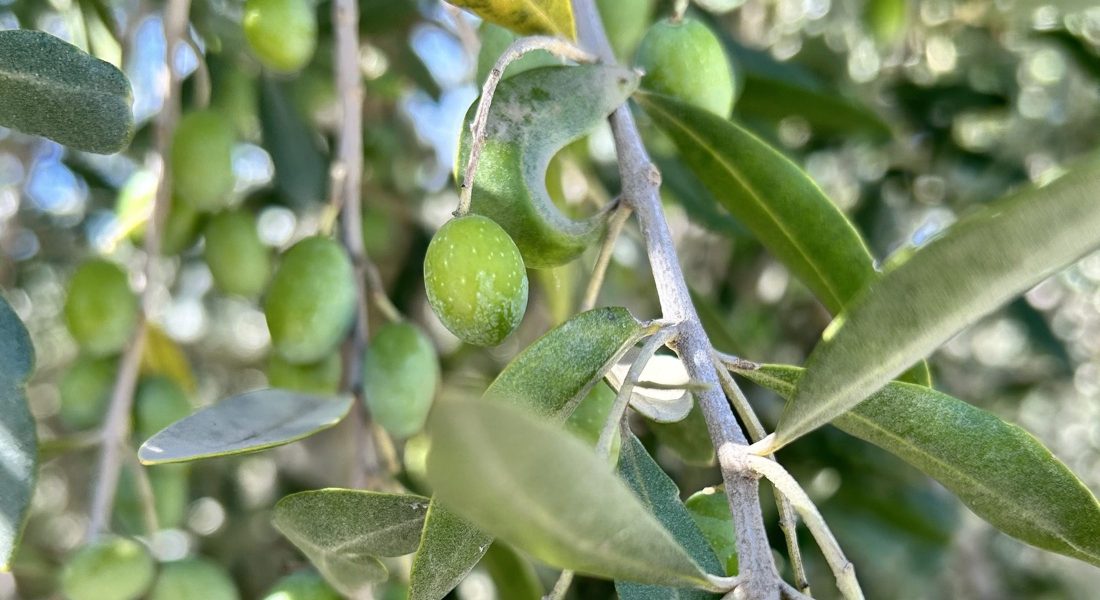
When we observe an olive tree, especially at the height of summer, its canopy appears as a uniform mass of leaves, similar in shape, colour and texture. Yet this apparent uniformity is deceptive.
Every leaf is a distinct physiological entity, with its own history, function and changing role over time. The olive tree not only produces leaves that differ from one another; it also recognises them, evaluates them and ultimately decides which to preserve and which to sacrifice when environmental conditions become critical.
A leaf is a remarkably sophisticated energy system, constantly balancing energy production against energy consumption. Newly emerged leaves are rich in chlorophyll, equipped with highly efficient chloroplasts, flexible cellular membranes and an exceptional capacity to dissipate excess light. They sustain shoot growth, support fruit enlargement and provide the energy required for fatty acid synthesis. Two-year-old leaves remain photosynthetically active, yet their metabolism begins to slow. Their photosynthetic efficiency declines, and their sensitivity to environmental stress gradually increases. Leaves older than two years become progressively less productive and more costly to maintain. They consume more energy than they generate, accumulate oxidative damage and struggle to adapt to changing climatic conditions.
This internal diversity is far from accidental. The olive tree perceives it and uses it to regulate its overall energy balance. Every leaf continuously sends biochemical signals that inform the tree about its physiological condition, its photosynthetic efficiency, the amount of carbohydrates it is producing and its capacity to withstand stress.
When a leaf ceases to perform efficiently, the tree recognises it through a sophisticated network of internal signals: hormones such as abscisic acid, markers of oxidative stress, changes in chlorophyll content and alterations in cellular respiration. It is a complex molecular language, composed of countless biochemical messages that allow the olive tree to assess each leaf individually.
Position within the canopy further shapes the identity of every leaf. A leaf exposed to the southern sun experiences far greater levels of solar radiation and heat than one growing in the shaded interior. An apical leaf receives more light and wind than a basal one. Likewise, a leaf borne on a vigorous shoot operates with a different metabolic profile from one growing on a weaker branch.
The olive tree integrates all these differences into the overall management of its canopy, modulating photosynthesis, transpiration and the lifespan of every individual leaf. Scientific research consistently confirms this remarkable internal variability. Studies conducted on olive trees exposed to water deficit have shown that leaves respond differently according to their age, position within the canopy and degree of solar exposure.
This ability to distinguish among its leaves is more than a physiological process; it is a fundamental survival strategy. Under severe stress—intense heat, persistently warm nights, excessive solar radiation or prolonged water shortage—the olive tree cannot afford to maintain leaves that consume more energy than they produce. Instead, it activates a programme of selective senescence, shedding its least efficient leaves to protect the remainder of the canopy. By reducing its evaporative surface, conserving water and concentrating resources on younger tissues and developing drupes, the tree safeguards its long-term resilience.
Leaf fall, therefore, is not a symptom of weakness but the outcome of a deliberate energetic strategy. Recognizing that not all olive leaves are alike transforms the way we read the tree itself. It is precisely this hidden internal diversity that underpins the olive tree’s remarkable ability to withstand heat, drought and the increasingly erratic climatic conditions that define modern olive growing.